GPT Image 2
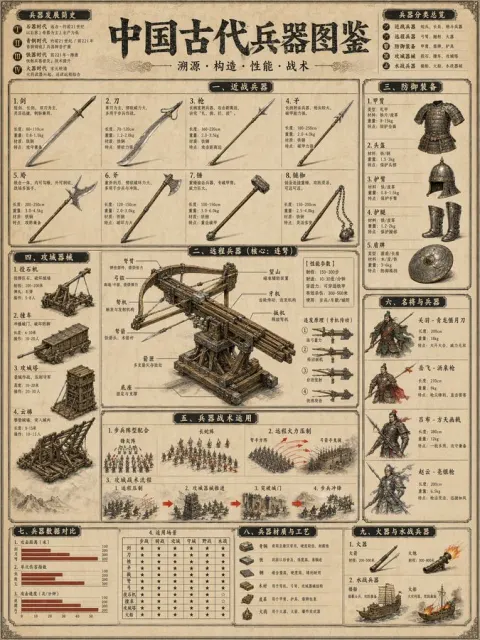
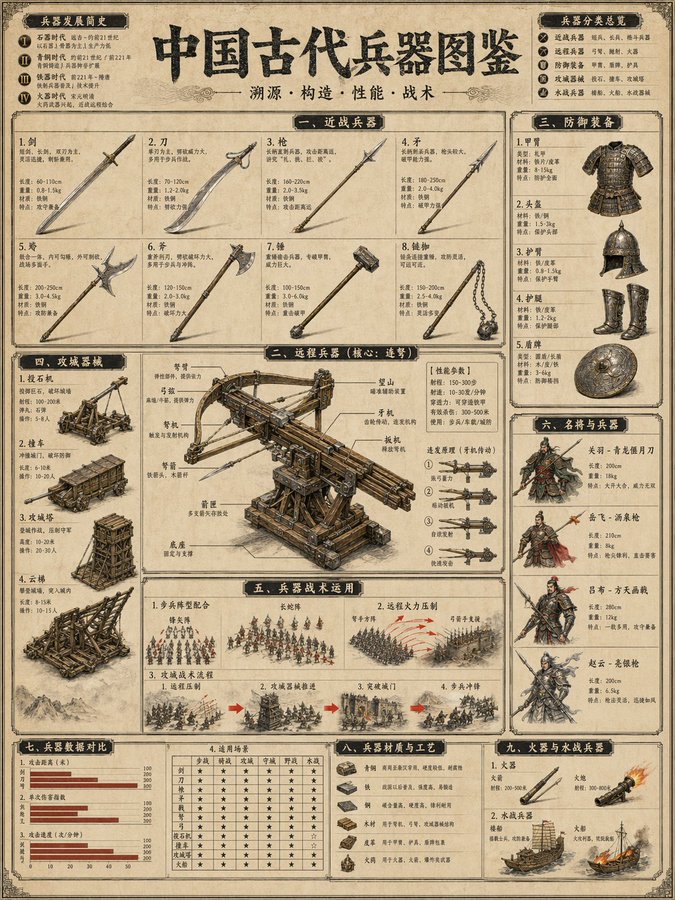
Ancient Chinese Weapons Illustrated
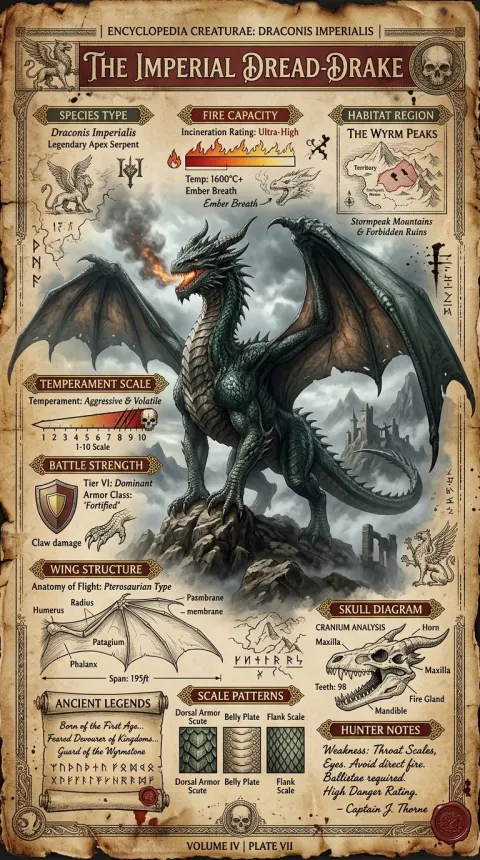
A breathtakingly intricate masterpiece of technical infographics, themed [SUBJECT / e.g., Ancient Chinese Naval Battles], designed strictly based on the following first-principles visual parameters.

[Canvas and Color Dictatorship]
Base Canvas (L0): Aged military parchment texture, warm #E8DCC4, with subtle age stains and historical map fiber textures.
Systematic color (L1, ~60%): Traditional heavy charcoal ink #2B2B2B, used for structural technical lines, soldier silhouettes, and mechanical connections.
Content hierarchy colors (L2, ~30%): Weathered Bronze, Deep Paint Red, and Iron Gray #555555, used to distinguish different units and materials.
Accent Color (L3, ~5-10%): High visibility vermilion #E62B1E, reserved only for tactical arrows, fire/explosion, and the commander's flag.

[Spatial Gravity and Topology]
Composition: [Choose one: Master and slave satellite layout / 45-degree isometric panorama]. Information gravity flows in a logical tactical sequence.
Boundaries: Professional editing layout with clean margins; The negative space serves as a "tactical breathing room" to separate different combat phases.
Module topology: [N] different information modules depicting different scales (e.g., individual weapon details versus macro formations).

[Dimensions and Graphical Physics]
Style: A fusion of traditional Chinese meticulous brushwork (fine line drawings) with modern military tactical blueprints (similar to the "Osprey Publishing" style).
Line language: 0.8pt sharp technical outline / 0.3pt elegant background grid line / 2pt bold border for main title stamp.
Surface effects: Realistic material rendering—wood grain on ballistae, metallic sheen on scales, and subtle ink gradients and shadows on terrain.

[Typesetting Ecosystem — Adaptive Density]
Layout density: Map-dominated (65% visuals / 35% text).
T1 macro title: a huge, very bold traditional Song font character used for the main title "[Topic Chinese Name]". It must be strictly pure Chinese characters, with an ink embossing pattern.
T2 Module Title: Kai font, included in a dark rectangular "rank" badge, marking different tactical areas.
T3 Body Text: Clean, medium-weight black font (sans-serif), used for weapon specifications and tactical roles. Each character must be as sharp as a knife.
T4 Notes: Miniature text with ultra-clear technical lines pointing directly to components (e.g., trigger mechanisms, arrow feathers, armor seams).

[Narrative Flow]
Narrative Mode: [Choose one: Sequential Process / Core Radiation].
Visual entry point: The most important tactical unit (for example, command chariots or main siege engines).
Path mechanism: Number sequence (1, 2, 3... ) or bold vermilion arrows to guide viewers to understand the logic of the battle.

[Iconography and Metaphor]
Icon style: Highly detailed historical pictograms for various branches (infantry, cavalry, archers).
Core metaphor: Military order is like a precise clockwork mechanism.
Consistency: All symbols must follow the military aesthetics of [period/dynasty, e.g., Tang Dynasty].

[Module Structure — Suggested Blocks]
[MOD 1: Core Exhibit] — Main [Weapons/Formations], featuring exploded view details that showcase internal mechanical structures.
[MOD 2: Tactical Map] — Top-down schematic showing unit movement and firelines.
[MOD 3: Soldier Equipment] — Close-up of attack and defense equipment side by side.
[MOD 4: Logistics/Statistics] — A chart based on small icons showing range, weight, or troop density.

[Final Execution Lock]
Rendered as single, ultra-detailed educational plates. All visual systems must be consistent internally with professional museum archival aesthetics. Every pixel must serve the purpose of illuminating complex military history.
Resolution goal: Maximum information density, reaching print-grade encyclopedia quality.

Topic: Illustrated Guide to Ancient Chinese Weapons 3:4 4K Clear and legible text