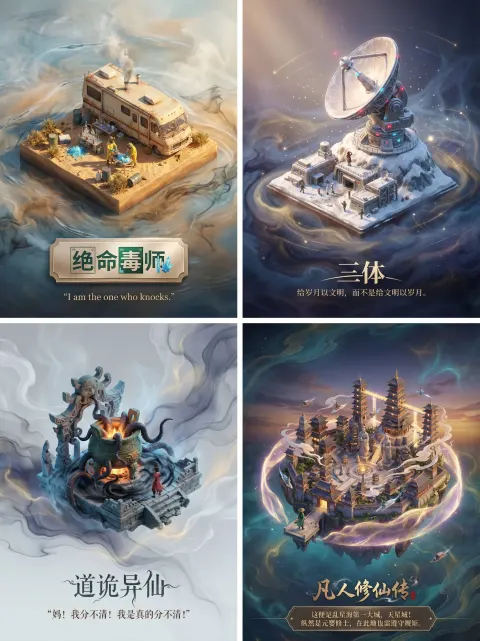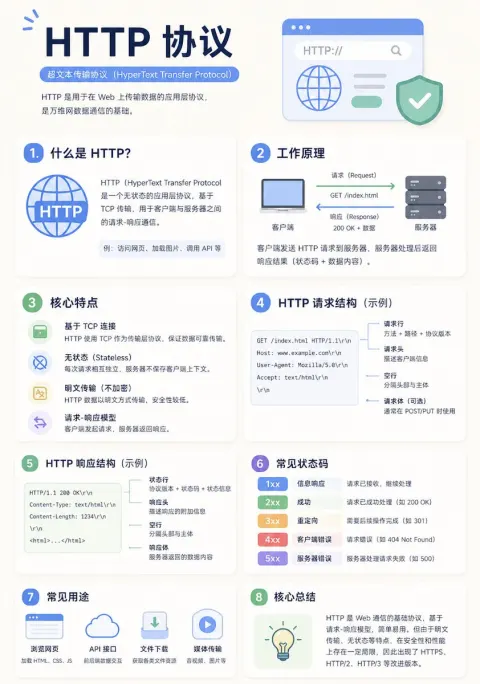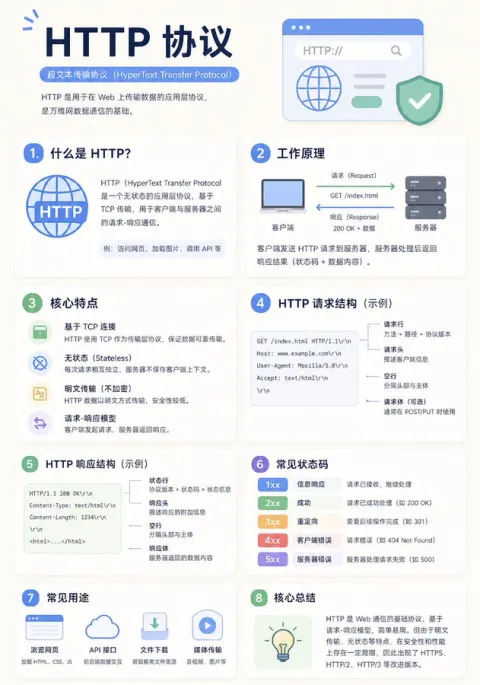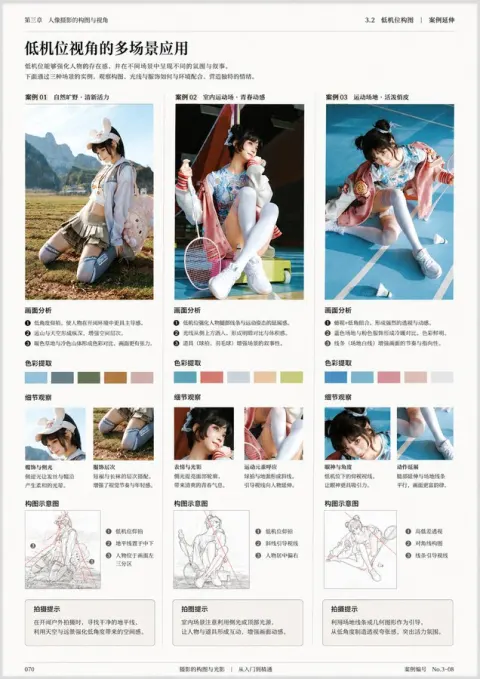
GPT Image 2
Book Summary Infographic Poster Design
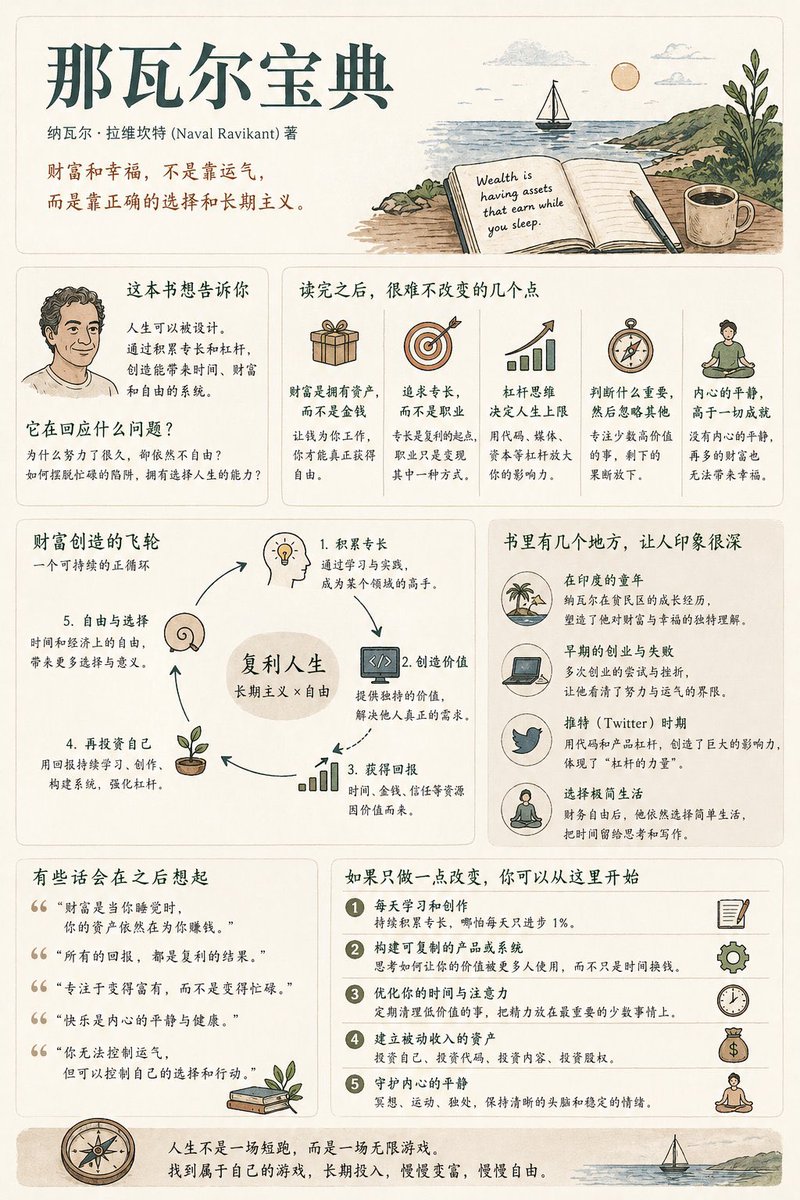
Generate a [Medium Information Density] book summary infographic poster with the theme "book title.

⸻

🔶 Step 0 (Key Prejudgment)

Before starting generation, please first determine which category this book is closer to (multiple selections allowed):

* Cognitive Growth (Thinking / Self-improvement)
* Business / Wealth (Earning Money / Career / Investment)
* Psychology / Emotion (Relationships / Inner / Human Nature)
* Novels / Stories (Narrative / Characters / Metaphors)

👉 Then, depending on the type, adjust the focus and structural emphasis (not changing appearance, but changing content logic):

Genre and Content Focus
Cognitive models / ways of thinking / misconceptions
Business Leverage / Decision-Making / Methodology
Psychological Emotional Mechanisms / Human Nature / Relationships
Fiction characters / conflict / metaphors / themes

⸻

🎨 [Overall Style]

Modern minimalist UI + light retro illustration style
Soft light background (cream / beige / light gray)
Low-saturation color schemes (dark green / navy / brown)

👉 Keywords for temperament:

* Quiet
* Content
* Read slowly

⸻

🧩 [Core Principles (Very Important)]

❗ Do not use fixed module titles
❗ Don't force yourself to be 'structurally complete'

Please organize the information according to the type and content of the book:

👉 You can:

* Merging/deleting modules
* Adjust the order
* Rewrite all subheadings
* Strengthen a certain part (for example, weaken the "methodology" in a novel)

👉 Objectives:

It's more like "someone who understands it talking" rather than "organizing notes."

⸻

🟡 [Content Modules (Dynamically Combined by "Information Type")]

The following is not a template, but a material pool 👇
👉 Please freely choose by book type + reorganize

⸻

(1) Opening (must include)

* Book Title (Visual Center)
* Author
* One-sentence insight (must be like a human word)

👉 Adjust tone according to type:

* Cognitive Category 👉: "You think it's A, but it's actually B"
* Business category 👉: "The problem is not effort, but leverage"
* Psychological Category 👉 "A lot of pain actually comes from..."
* Novel category 👉 "This is about ...... The story of

👉 Illustrations should have "metaphorical meaning"

⸻

(2) Explain this book clearly (core understanding)

Don't write about the "core idea"; you can express it like this:

* "What this book really wants to say is..."
* "If I had to talk about just one thing, it would be..."

Content includes:

* Core Thesis
* What real problem is it responding to?

👉 Variation by type:

* Novels 👉 can write about the "underlying theme of the story"
* Psychology 👉: Emphasize "Why people are like this"

⸻

(3) The Most Worthwhile Things to Take (Key Areas)

The title style should be natural, for example:

* "A few points that are hard not to change after reading"
* "These are the things that will slowly affect you."

Adjust content 👇 according to the type

⸻

👉 Cognitive (model-leaning)

* Thinking misconceptions
* Cognitive upgrade points
* Decision-making methods

👉 Commercial (Action-oriented)

* Leverage
* Money-making logic
* Strategic selection

👉 Psychological (Feeling Leaning)

* Emotional mechanisms
* Relationship insights
* Internal patterns

👉 Novel (partial understanding)

* Character selection
* Conflict
* Symbolic meaning

⸻

Each key point:

* A short point of view (must speak like a person)
* Sentences 1–2 explain
* Small icons

⸻

(4) A "key structure" (visual core)

Title is naturally expressed, for example:

* "All content actually revolves around this structure"
* "To understand this book, you can use this diagram"

Automatically changes 👇 according to type

Type recommendation structure
Cognitive thinking models / decision-making paths
Business leverage system / closed-loop money-making
Psycho-emotional cycles / behavioral patterns
Novel character relationships / conflict structure / fate trajectory

⸻

(5) Examples / fragments from the book (more like storytelling)

The title can be:

* "There are several memorable places in the book"
* "What do these clips actually reveal?"

Varies 👇 depending on the type

* Business / cognitive 👉 case studies
* Psychological 👉 scenes / emotions
* Novel 👉 plot excerpts

Each item:

* One sentence + icon
* Have a sense of imagery

⸻

(6) Some sentences that will stay (Golden Quote Section)

Title Style:

* "Some words will be remembered later"
* "A few words worth reading slowly"

👉 Strong sense of blank space (visual focus)

⸻

(7) Changes that can be taken away (Action Zone)

Title:

* "If only a small change is made"
* "You can start here"

Adjust 👇 according to the type

Types and modes of action
Cognitive thinking methods have changed
Concrete business actions
Psychological awareness / relationship changes
Reflections on Life in the Novel (Light Action)

Requirements:

* 3–5 items
* Must be specific / executable / perceptible

⸻

🎯 [Design Details]

* Adaptive mesh layout (not rigid symmetry)
* Card-based information (blank space preferred)
* Image and text ratio approximately 6:4
* Illustrations in a unified style (hand-drawn / linear)
* Clear hierarchy (larger important information)

⸻

✍️ [Language Style (Determines Quality)]

✅ Requirements:

* Telling books like a person
* Understand and filter
* A bit of a "sudden enlightenment"

❌ Don't:

* "This book discusses..."
* "The definition is..."
* Empty talk / clichés / over-summarization

⸻

📦 [Output Requirements]

* Chinese (with a small amount of English accents allowed)
* Medium information density
* Suitable for social media dissemination (Xiaohongshu / Twitter / posters)