GPT Image
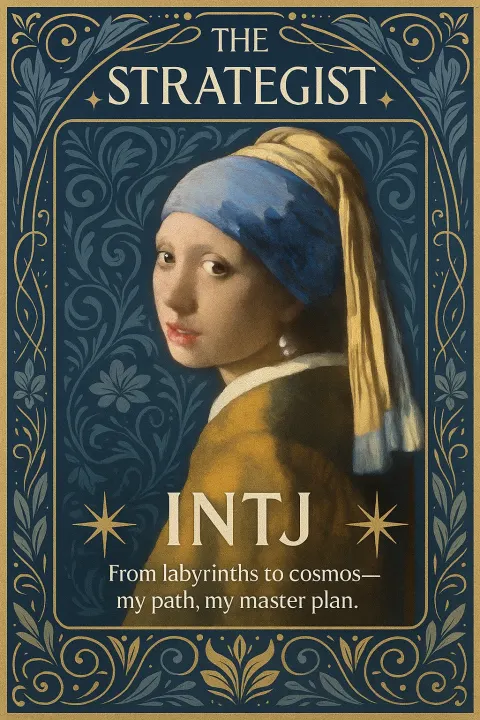
Chinese Classical MBTI Poster
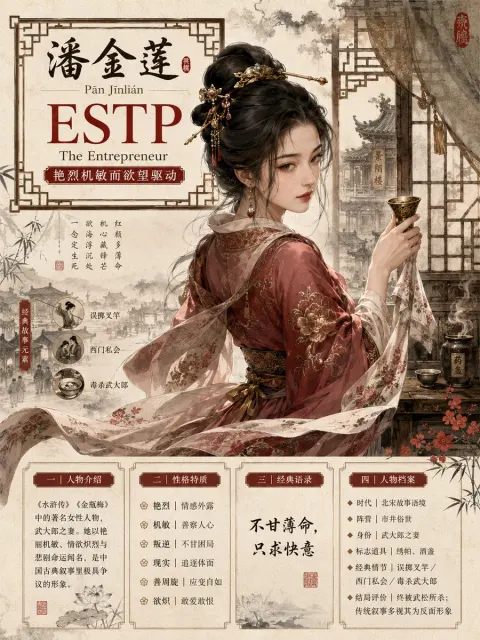
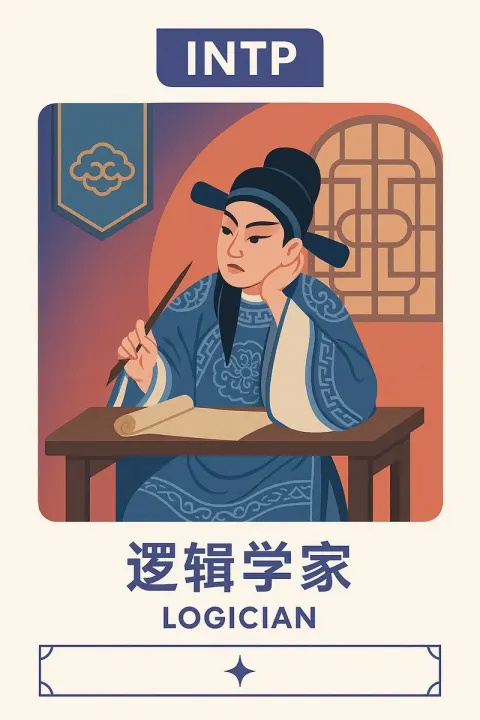
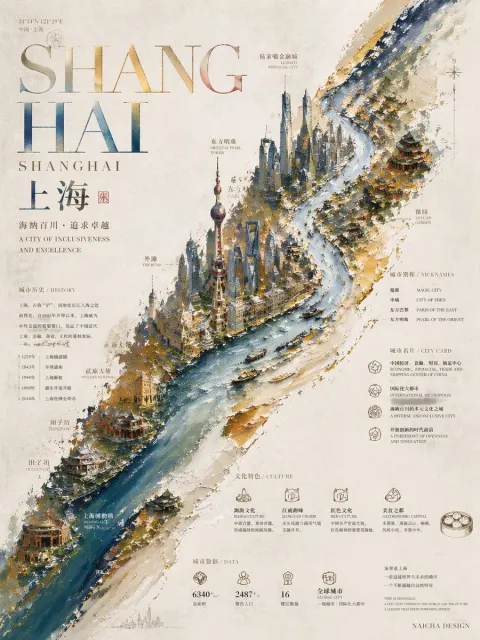
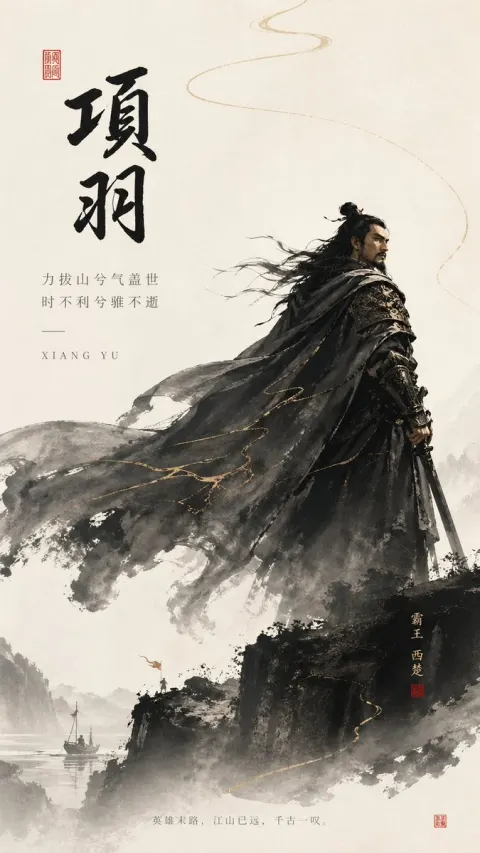
Title: Please generate a [Chinese classical figure MBTI high-end Guofeng information poster].

Prompt: Please generate a [Chinese Classical Figures MBTI High-End Guofeng Information Poster].

[People]
Character Name: {Character Name}
[Pre-Analysis Requirements]
First, based on the mainstream image of this figure in Chinese classical literature, historical narratives, or folk culture, complete and apply the following information:

Pinyin: Use standard Chinese Pinyin, with tone preferred for those with tones
MBTI type: Choose the type that best matches the character's core personality
MBTI English Titles: Use common MBTI titles such as The Commander / The Logistician / The Advocate
Chinese personality tag: Summarize a character's temperament in 8–14 characters
Character Feature Extraction: Identity Positioning
Core values
4–6 personality keywords
Logo design elements
Representative items / weapons / mounts
Classic story elements: 1–3
Character endings or historical evaluations

If there is dispute over the information, use the version that best aligns with public perception; Uncertain information must not be fabricated; If the source of a classic quote cannot be verified, it should be rewritten with original short phrases that match the character's spirit, and avoid fabricating famous quotes.
[Overall Style]
Vertical 3:4 composition, 4K ultra-high-definition, high-end Chinese-style character setting poster.
Integration of images: Chinese ink painting, light color meticulous brushwork, xuan paper texture, traditional Chinese patterns, and modern premium infographic layout.
The background is a warm off-white xuan paper color, accented with light ink clouds, winding patterns, window latticework, and cinnabar seals.
Overall temperament: elegant, dignified, collectible-grade, strong cultural sense, clean and sophisticated.
[Core Visuals: 3D Breaking Through the Frame]
The subject must have a strong semi-realistic effect of "3D breaking out of the frame / leaping out of the frame" / leaping out of the painting.
The upper body or full body of the figure is positioned in the central main visual area, creating a clear depth of field before and behind.
Characters' sleeves, weapons, ribbons, hair, mounts, clouds, or symbolic props can break through Chinese borders to create a three-dimensional relief-style frame-out effect.
The visual focus must be on the figure, not overshadowed by text, background, or decoration.
Maintain Eastern classical aesthetics, avoid modern game UIs, avoid cyberpunk, avoid Western fantasy armor, and avoid exaggerated anime faces.
[Character Design]
Mainstream image design based on {character name}:
It preserves the most recognizable clothing, facial features, postures, props, and the spirit of the era
Facial expressions must match the character's personality: dignified, calm, tragic, refined, rebellious, benevolent, or clever, determined by the character's setting
Actions should have a narrative sense and reflect the characters' fate and personal strength
The background can be toned down and classic scenes added, but it must not overshadow the main story
[Layout Structure]
The poster is divided into three main sections:

1. Top Title Area

Main title: {Character Name} ({Pinyin})
Large font MBTI: {MBTI type}
English title: {MBTI English title}
Chinese personality label: {Chinese personality tag}
Use traditional window frames / grille frames to wrap the title area

The title is clear, proper, and eye-catching, balancing calligraphic style with modern typography
2. Central Main Visual Area
Figures occupy the central position of the composition
The 3D frame effect is the most obvious
Ink wash with light colors rendering, exquisite details on clothing folds, faces, and weapons
The background incorporates elements of the characters' representative stories, such as battlefield mist, pavilions, rivers, mountains and rivers, palaces, bamboo groves, moonlight, and more

Overall, it carries an Eastern epic feel and a sense of character fate
3. Bottom Information Area
Designed with four neat modules, resembling an advanced Chinese-style MBTI infographic:
Module One | Character Introduction
Use 40–60 words to introduce the character's origin, identity, core image, and cultural status.
Module 2 | Personality traits
List 4–6 keywords, each with a short description of 4–8 words.
Format example: Loyalty and righteousness | Keeping promises and keeping promises
Module Three | Classic Quotes
Place one phrase, no more than 18 characters.
If the true quote is uncertain, use a general expression that matches the character's spirit and do not fabricate the source.
Module 4 | Personal Profiles
Includes: Era / Faction / Identity / Iconic Items / Classic Storyline / Ending or Evaluation.
Information must be short, accurate, and readable.

[Text Requirements]
All images are in Chinese Simplified.
Chinese text must be clear, neat, free of garbled text and typos.
Keep the main text short and avoid long paragraphs.
Clear hierarchy of titles: character names are the largest, MBTI follows, and module titles are clear.
The bottom module has ample blank space, avoiding crowding and no stacking of text.
[Color]
Main colors: Xuan paper off-white, light ink gray, cinnabar red, deep gold.
Secondary colors are adjusted according to the character's temperament, such as blue-green, dark black, crimson, jade white, and ochre.
The colors are restrained, sophisticated, and not gaudy.

[Negative Constraints]
Don't wear modern streetwear.
No sci-fi mechs.
No Western fantasy style.
Don't overdo it.
Do not use low resolution.
Do not garbled text.
Do not mispronounce the pinyin.
Don't mistake the person's identity.
Do not paint characters as irrelevant ones.
Don't let the bottom info area block the main subject.
Don't clutter the background.
Don't cheap-look game flyers.
[Final Output]
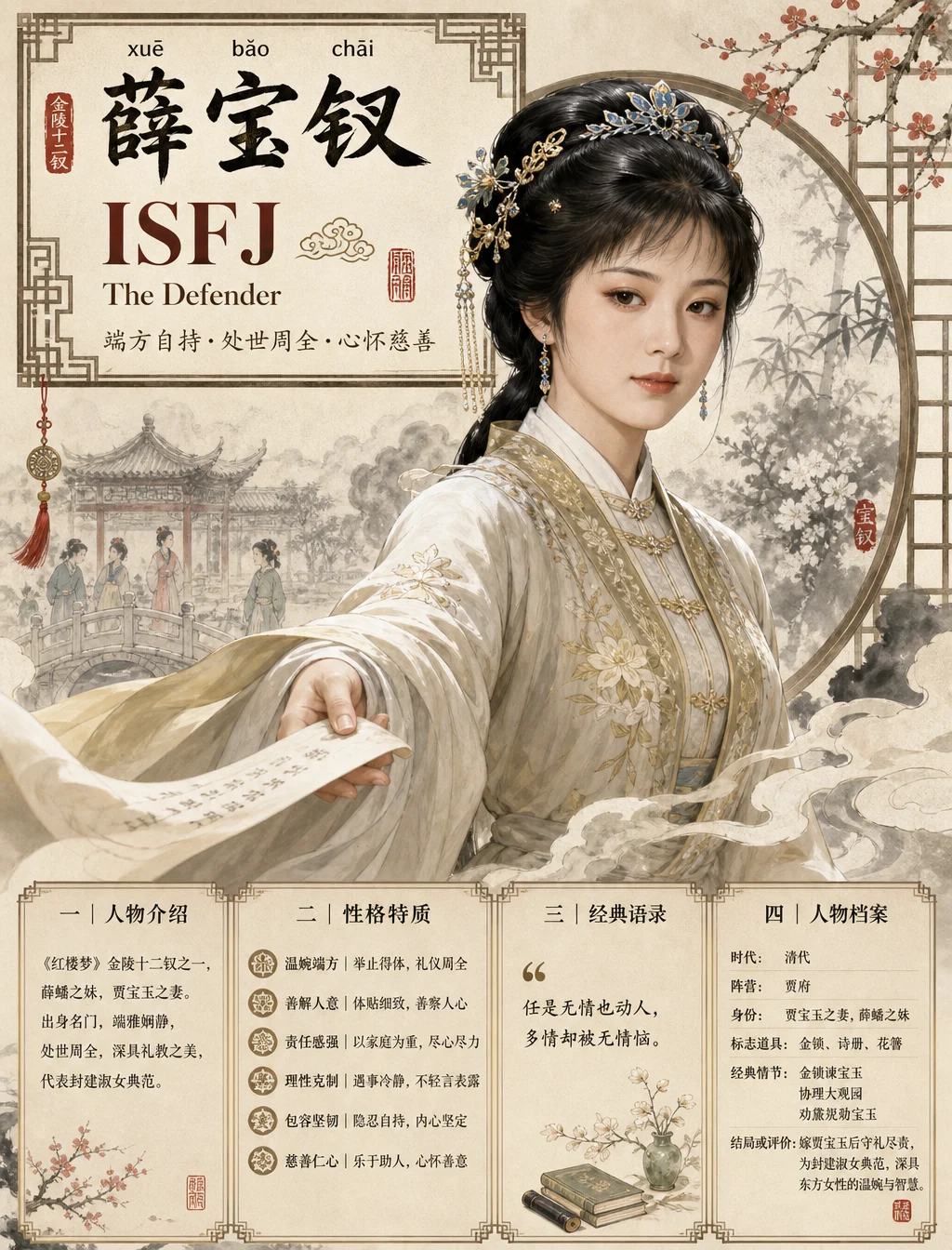
Directly generate the full poster image:
Vertical 3:4, 4K Ultra HD, Chinese ink and light color, premium Chinese-style infographics, 3D characters stand out from the frame, complete MBTI information, clear text, exquisite layout, collectible-level visual effects.

Character: Xue Baochai (character image can refer to the 1987 version of Dream of the Red Chamber Ouyang Fenqiang)