GPT Image
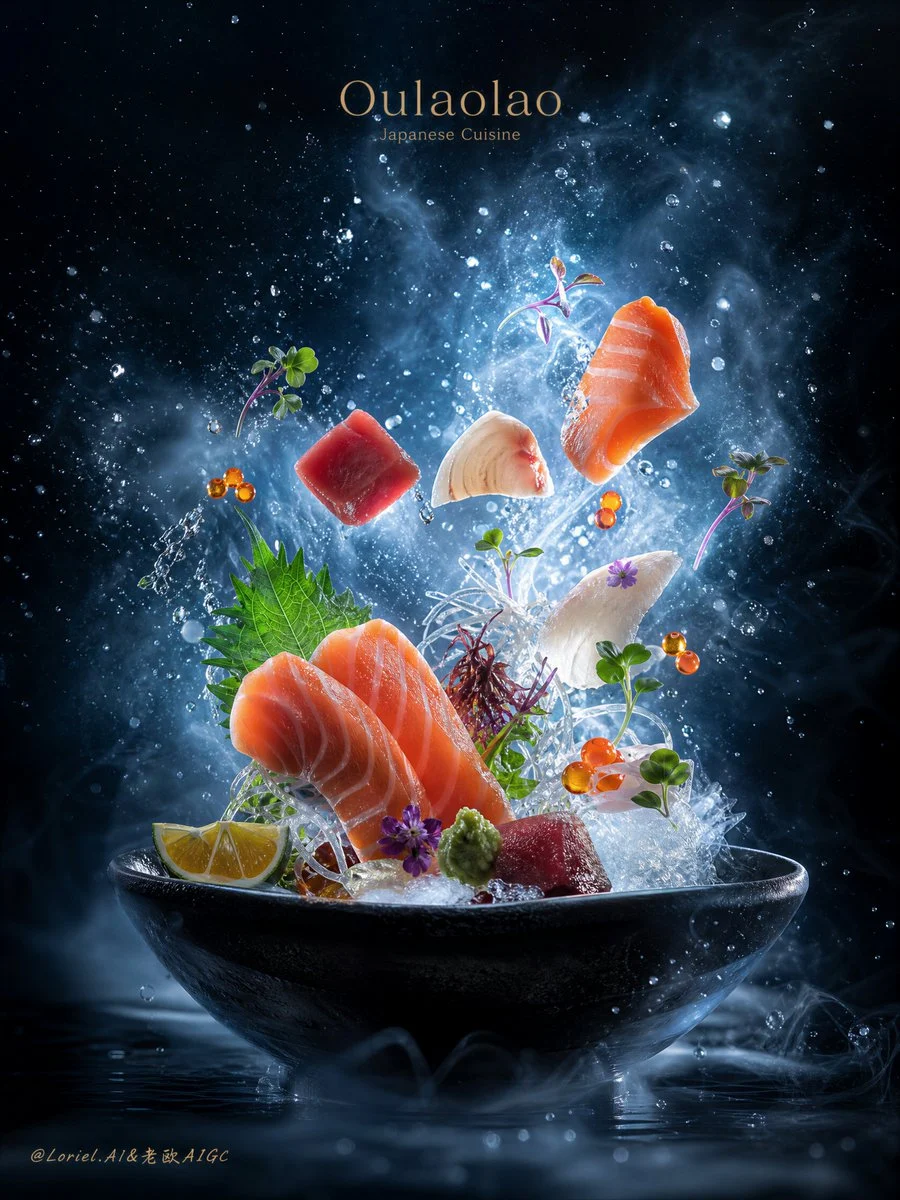
Cinematic Sashimi Poster
Title: Create an ultra-premium cinematic food advertising poster...

Prompt: Create an ultra-premium cinematic food advertising poster for Oulaolao Japanese cuisine, focused on a cold-toned sashimi and raw seafood concept with a blue-black luxury atmosphere, extreme ingredient realism, and master-level backlit mist, condensation, and airborne particle detail. The image should feel like a frame from a high-end food film: luminous, cold, precise, atmospheric, and spatially deep. The key priority is strong cinematic backlight, translucent cold vapor, and a rich sense of foreground-to-background depth.

Main composition:
Use a vertical premium food-poster composition against a deep blue-black background. In the lower center, place one elegant dark Japanese serving bowl or refined ceramic vessel as the visual anchor. From the bowl, raw seafood ingredients rise upward in a controlled, graceful burst, surrounded by cold mist, condensation haze, and suspended micro particles. The composition should have clear spatial layering: a softly blurred foreground edge, a sharply rendered midground hero dish, and a luminous atmospheric background receding into darkness and mist.

Food direction:
Create a luxurious Japanese sashimi-inspired composition with premium raw ingredients such as:
thick-cut salmon sashimi,
tuna cubes or slices,
delicate white fish,
microgreens,
seaweed strands,
shiso leaves,
purple edible flowers,
ikura accents,
daikon threads,
small citrus details,
micro droplets and chilled glaze reflections.
The food should feel rare, expensive, and masterfully prepared, suggesting elite omakase dining.

Ingredient realism:
Push ingredient realism to the highest level:
silky fish grain,
cool translucent flesh,
wet reflective seafood surfaces,
precise knife-cut geometry,
micro condensation,
tiny water beads,
leaf fibers,
fresh marbling,
subtle natural moisture,
cold reflective highlights.
The food must look alive, fresh, chilled, and premium.

Backlight and cinematic lighting:
This is the major focus. Use strong cinematic backlight passing through the cold mist, condensation haze, and airborne salt-like particles. The light should create a luminous halo around floating ingredients, translucent edges on sashimi slices, glowing droplets, and delicate particle sparkle in the air. Use a combination of cool backlight, subtle side light, and controlled shadow so the ingredients feel sculpted and dimensional. The lighting must have film-level quality: elegant contrast, soft bloom, volumetric atmosphere, and emotional depth.

Spatial depth and transparency:
Enhance the feeling of distance and air between objects. The composition should not feel flat. Create visible foreground-midground-background separation using selective focus, atmospheric haze, and layered mist. The bowl and main floating ingredients should sit in the sharpest middle plane, while smaller particles drift both closer to the lens and deeper into the background. The cold mist should create a sense of transparent space, allowing the eye to travel through the image. The result should feel breathable, open, and cinematic.

Cold mist and particle effects:
Render extremely realistic cold vapor, sea-cold mist, condensation haze, and airborne particles. Show elegant ribbons of cool white mist illuminated from behind, tiny sea-salt-like dust, fine ice-like micro particles, suspended droplets, and floating moisture catching the light. The mist should be thin, layered, and translucent, with soft volume and believable flow. These elements should work with the backlight to create a glowing, transparent atmosphere rather than a heavy smoky cloud.

Motion and composition rhythm:
The ingredients should rise in a controlled cold burst, not a chaotic explosion. Arrange them with elegant vertical rhythm and clear hierarchy, with larger sashimi cuts in the main visual plane and smaller garnishes, droplets, and particles extending into the depth of the frame. The motion should feel lifted by chilled air and light, not thrown randomly.

Bowl styling:
Use a premium Japanese-inspired serving bowl in matte black, charcoal glaze, or subtly textured stoneware. The bowl should remain understated but refined, grounding the composition. Add only subtle reflections or minimal scattered salt-like particles near the base if elegant.

Background:
Keep the background dark, cool, and spacious, using deep navy, blue-black, charcoal, or obsidian tones. The background should contain just enough atmosphere for the backlight to bloom through mist and create cinematic depth, without distracting from the food.

Typography:
Keep typography minimal and premium. Add branding only if needed:
“Oulaolao”
Optional support line:
“Japanese Cuisine”
Typography should remain discreet and secondary.

Color palette:
blue-black,
deep navy,
charcoal,
cool silver highlights,
mist white,
salmon orange,
tuna crimson,
microgreen emerald,
purple floral accents.
The palette should feel cold, luminous, luxurious, and spatially refined.

Mood:
cinematic, cold, luminous, precise, atmospheric, luxurious, omakase, premium, spacious, transparent, backlit, hyper-realistic, world-class food campaign quality.

Rendering:
hyper-realistic commercial food photography, ultra-detailed raw seafood textures, premium Japanese sashimi styling, strong cinematic backlight, volumetric cold mist, realistic condensation haze, fine airborne salt and moisture particles, deep spatial layering, selective focus, dramatic blue-black culinary lighting, dark luxury composition, high-end advertising finish, 8k, masterpiece.

Negative prompt:
flat composition, weak backlight, muddy atmosphere, no depth separation, heavy smoke, warm steam, low-detail seafood, cartoon particles, cheap sushi menu look, cluttered props, plastic-looking fish, flat lighting, weak transparency, poor spatial depth