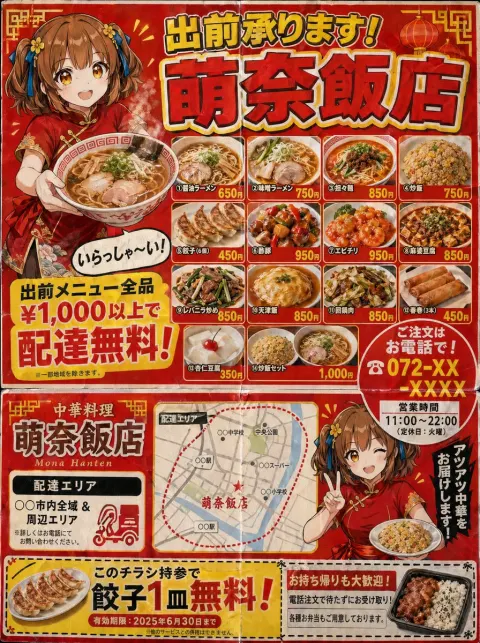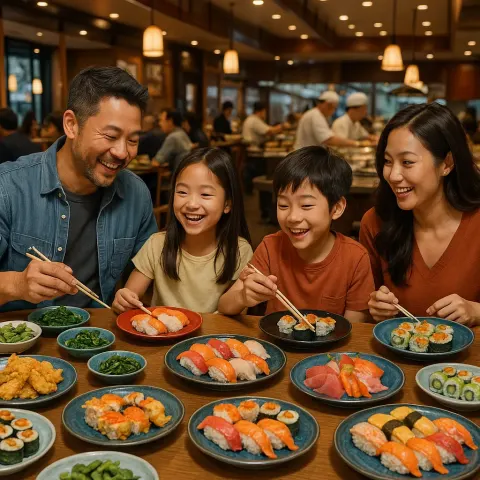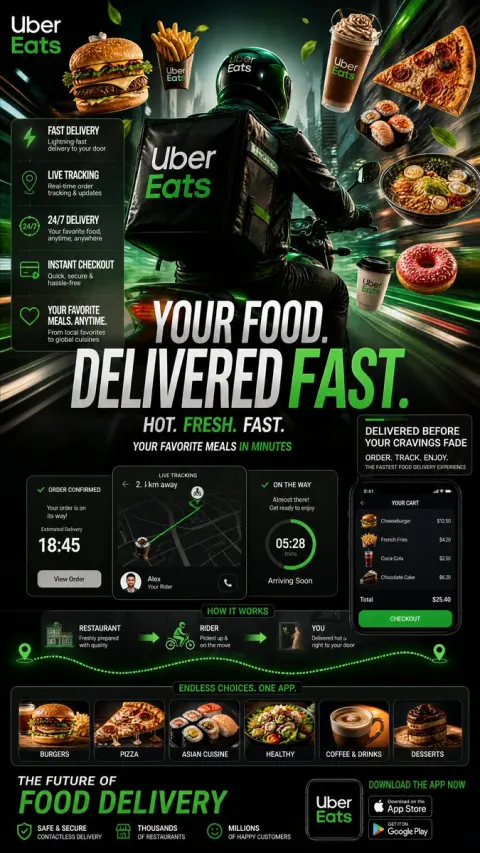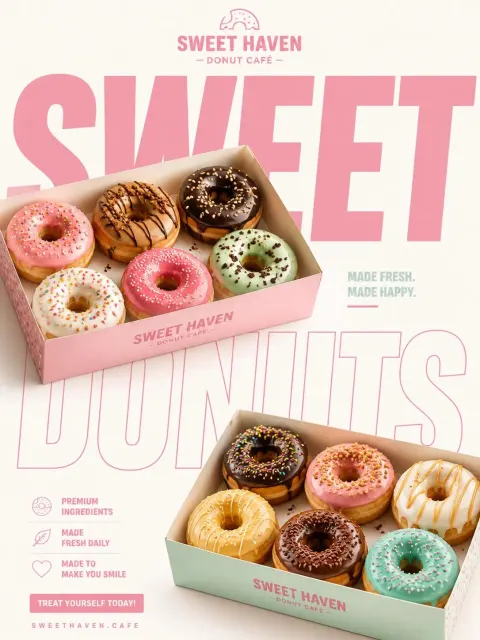
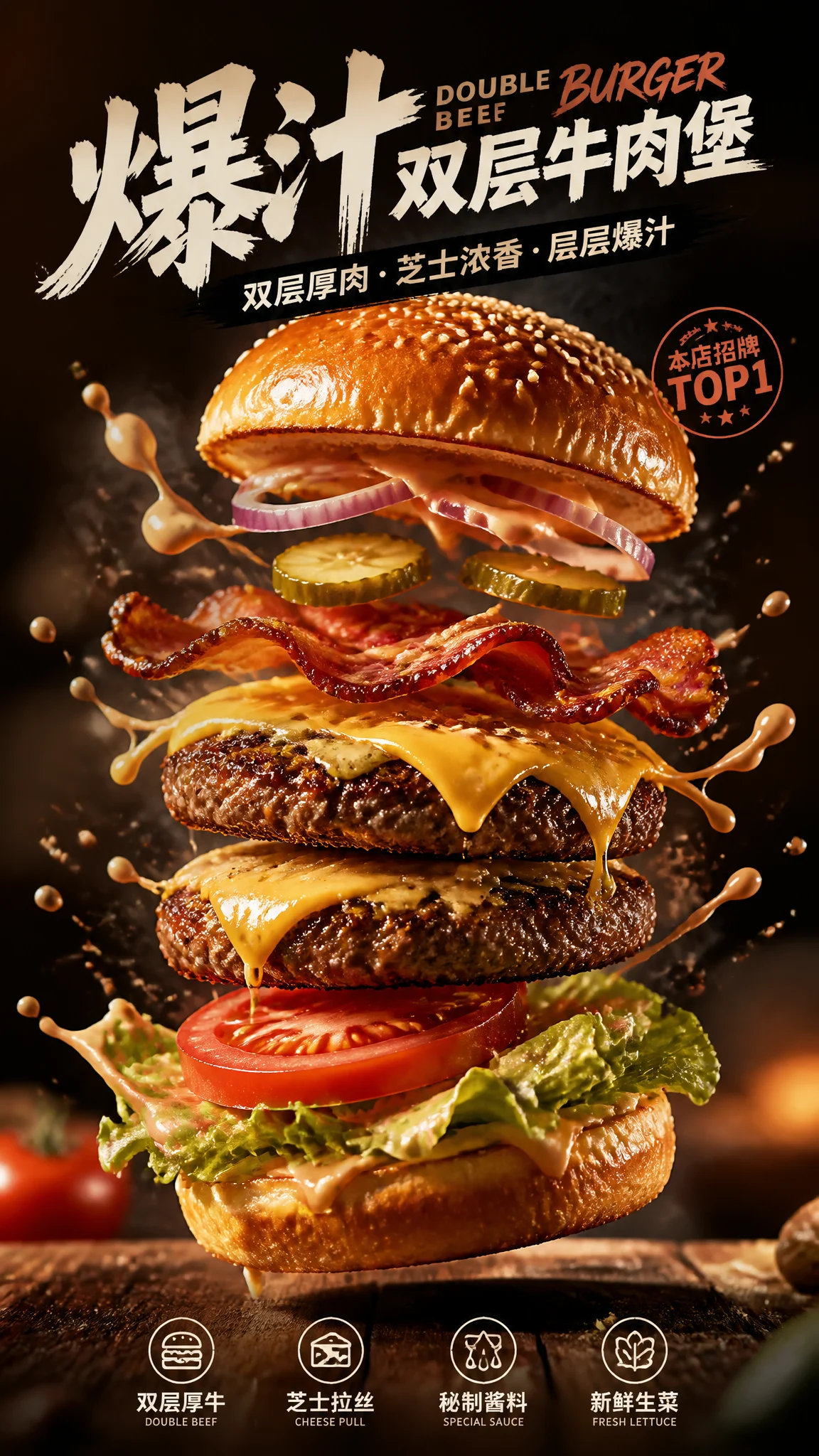
GPT Image
Floating Food Poster Generator
Title: Dish Information

Prompt: Dish information]
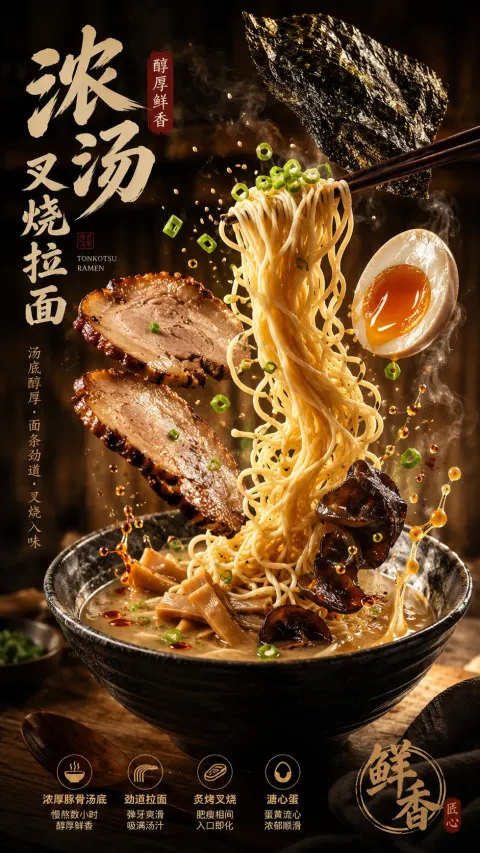
Dish name: {Fill in the dish name, e.g., Juicy Cheese Double Beef Burger / Thick Soup Char Siu Ramen / Thick Milk Brown Sugar Pearl Milk Tea / Freshly Sliced Salmon Sushi Roll}
Dish type: {Enter category, e.g., Hamburger / Ramen / Milk Tea / Sushi / Fried Chicken / Dessert / Coffee}
Core ingredients: {fill in the main ingredients, e.g., beef patty, cheese, lettuce, onion rings, secret sauce, brioche bread}
Texture selling points: {Fill in 3-5 selling points, e.g., juicy meatiness, cheese stretchiness, smoky sauce aroma, crispy layers}
Visual Atmosphere: {Fill in style, e.g., Passionate Caramel Color, Japanese Warm Wood Color, Cream Light Coffee Color, Refreshing Japanese Style}

[Text Design]
Add a design-oriented main title at the top or side:
Main title: {Dish Name}
Subtitle: {A short selling point, for example: double thick meat · rich cheese aroma · layers of juicy flavor}
You can add 3-4 short selling words at the bottom

The text should be styled like a real restaurant brand poster, with a sense of design, artistic quality, and commercial advertising, rather than manual-style layout. Fonts can be chosen according to the style of the dish: for burgers, use bold and impactful title text; for ramen, use Japanese calligraphy; for milk tea, use warm and soft brand fonts; for sushi, use refined and leftover premium restaurant fonts.

[Image Requirements]
Generate a premium commercial dining poster that is not an ordinary menu image or ingredient description, but a main visual poster of a new restaurant product with strong visual impact.

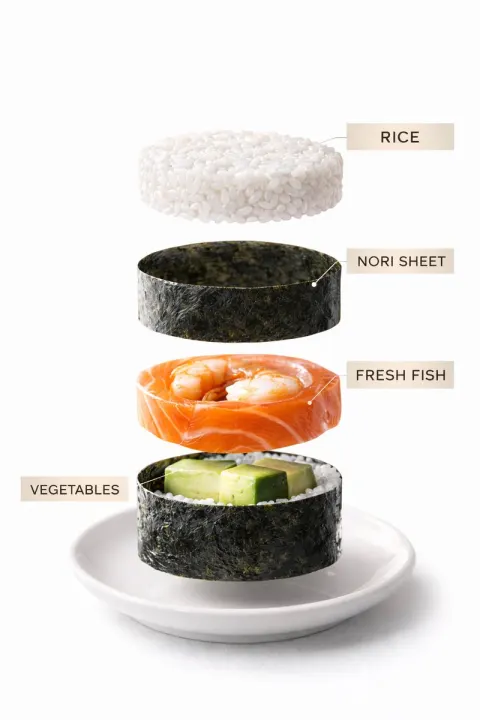
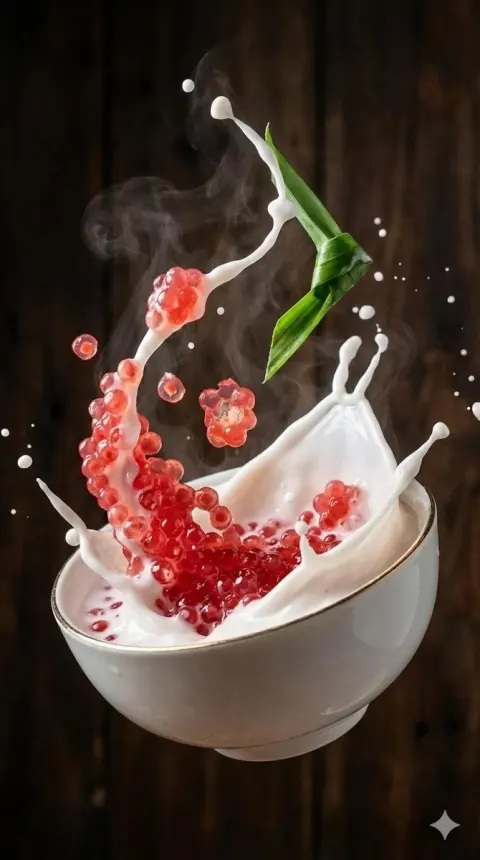
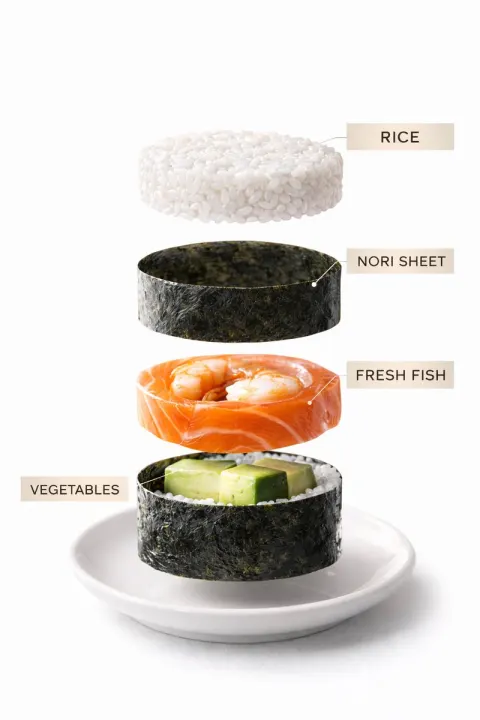
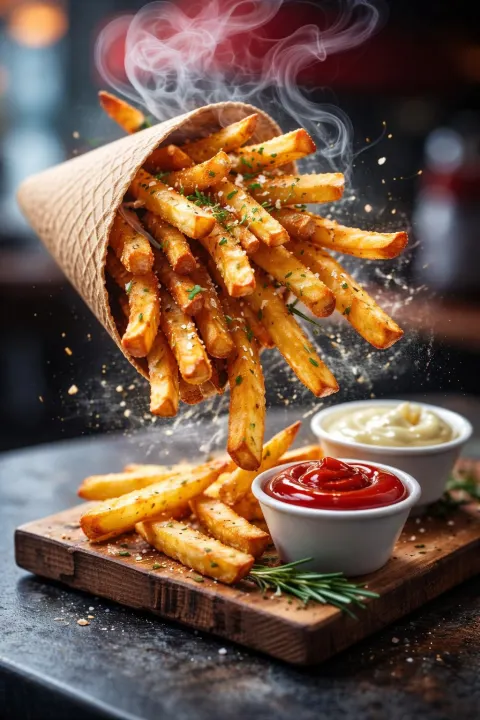
The composition uses a 9:16 vertical layout, with the main food centered and enlarged, occupying the main visual area. Ingredients need to be unfolded in an "explosive levitation" manner, naturally separated along the dish's hierarchical structure, creating distinct spatial depth, dynamism, and appetite impact.

Don't arrange ingredients too rigidly, nor do they look like a disassembly diagram. There should be natural displacement of heights, layering between foreground and background, slight perspective changes, and a sense of suspension—like the moment food is just being pulled open, taken apart, or burst open in midair.

[Food Texture Requirements]
Focus on expressing the authentic and tempting texture of food. Add appropriate dynamic elements according to the type of dish, such as: sauce splashes, cheese strands, steaming steam, soup bubbling, ice cubes, water droplets, floating pearls, sesame grains, spice fragments, and scattered ingredients. Dynamic elements should enhance appetite and avoid clutter.

[Background and Atmosphere]
The background should serve the flavor of the food. The background can have a subtle ambient atmosphere, such as wooden tables, warm light, shallow depth of field, steam, ice mist, or light spots, but it should not overshadow the main subject. The overall look should be high-end, clean, and have a commercial visual impression.

[Overall Style]
Premium commercial food photography, main KV for new dining products, vertical store posters, short video covers, main takeout images, authentic photography texture, strong appetite impact, dynamic floating ingredients, exquisite text layout, soft shadows, cinematic light and shadow.

The final effect should be like a high-impact food visual poster that can be directly used for new food product launches, store posters, social media promotions, and food delivery platform main images.